

Butynol and Waterproofing

Durable waterproofing for low-slope roofs.
Butynol is a flexible synthetic rubber membrane used to waterproof low-slope and flat roofs, decks, balconies, gutters and other areas where conventional roofing isn’t suitable.
It provides a continuous waterproofing layer and is designed to cope with the temperature changes, UV exposure and weather conditions experienced in New Zealand.
Above Focus is certified to install Butynol roofing systems.
Where Butynol is used
Butynol is particularly suited to:
Low-slope roofs
Flat roofs
Decks and balconies
Gutters
Roof areas with complex detailing
Areas where a continuous waterproofing membrane is required
Our Butynol process
The existing roof and substrate are assessed before work begins.
The substrate needs to be clean, dry, smooth and suitable for the membrane. Any damaged or unsuitable areas are addressed before installation. The membrane is then installed and detailed around joints, penetrations, edges and drainage points to create a continuous waterproofing system.
The completed roof is inspected before the project is signed off.
High-quality work. Impeccable results.
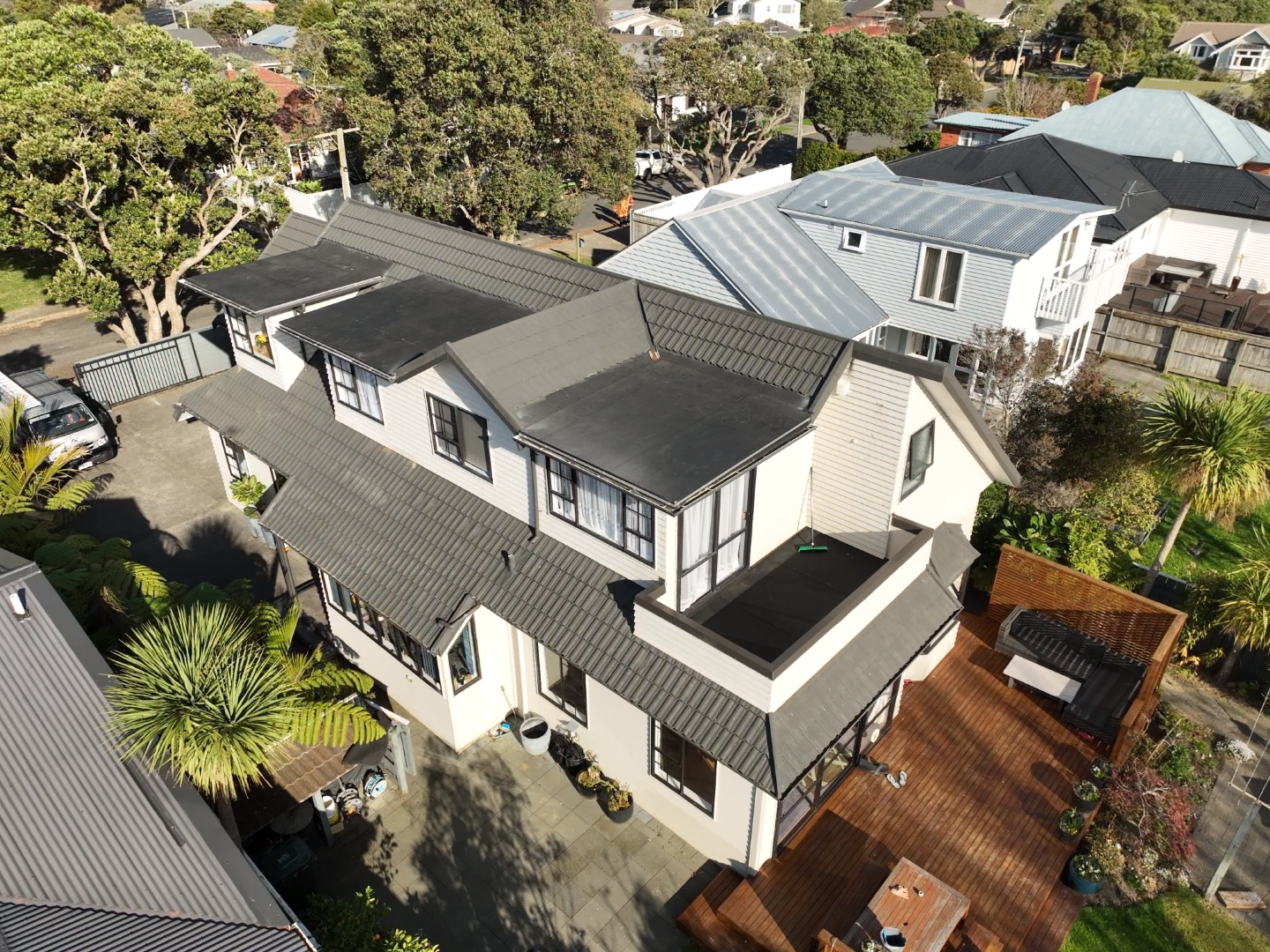
Case study — Lower Hutt
Three Butynol roofs were re-pitched and replaced to improve water runoff and provide a more reliable waterproofing solution.
The project also included restoration work to an existing Decramastic roof.

BEFORE

AFTER

BEFORE

AFTER

Is your waterproofing a ticking time bomb?
Find out with our free checklist.
Butynol FAQs
-
Butynol is a synthetic rubber waterproofing membrane. It is flexible and can be formed and detailed around the edges, penetrations and other features of a roof.
It is commonly used on low-slope and flat roofs where conventional metal roofing is not suitable.
-
Service life depends on the membrane system, installation, substrate, exposure and ongoing maintenance.
A properly specified, installed and maintained membrane can provide many years of service.
-
No.
Butynol is particularly suited to low-slope and flat roof applications, but the appropriate roofing system depends on the design, pitch, substrate, drainage and other site conditions.
-
Sometimes.
The existing roof and substrate need to be assessed first.
The substrate must be suitable for the proposed membrane system and any damaged or unsuitable areas need to be addressed before installation.
-
In some cases.
If the existing membrane and substrate remain in suitable condition, localised repairs may be possible.
If deterioration is widespread, replacement may provide a more reliable long-term solution.
-
Yes.
The roof should be kept clear of debris and drainage points kept clear.
Regular inspections can also identify problems around penetrations, flashings, edges and other details before they become significant.
-
Butynol can be used in areas such as decks and balconies when the system has been designed for that purpose.
The construction and surface finish need to be appropriate for the intended use.
-
Yes.
Butynol is commonly used as a waterproofing membrane beneath deck surfaces and in other areas where a continuous waterproof layer is required.
The overall system needs to be designed around the deck structure, drainage and finished surface.
-
Standing water can indicate a drainage or fall issue and should be investigated.
A Butynol membrane provides waterproofing, but the roof still needs to be properly designed and drained.
-
Sometimes.
The condition of the existing membrane, the location of the proposed repair and the compatibility of the new system all need to be considered.
-
Yes.
Detailing around penetrations is an important part of a Butynol installation.
Pipes, outlets, edges, corners and other penetrations need to be properly detailed to maintain the continuity of the waterproofing system.
Keep your roof looked after.

“Cam was incredibly helpful and flexible in checking out the job at short notice and communicated well on what was required to complete the repair. He liaised really well with the builder. The job was completed at short notice. Would highly recommend Above Focus for any roofing work.”
— Liam, Upper Hutt (Client)